
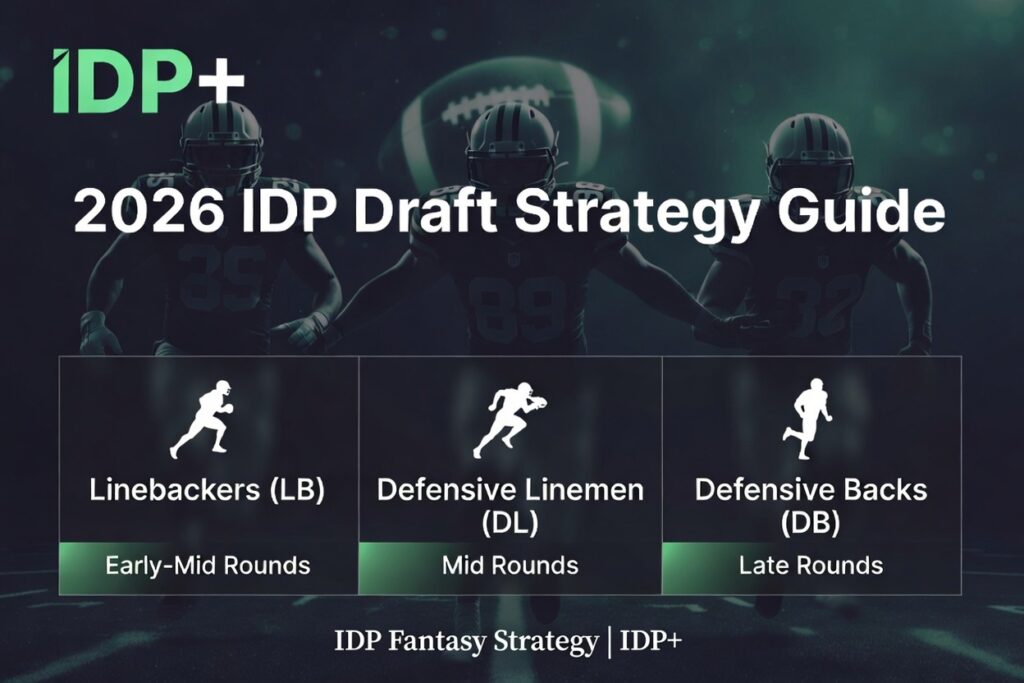
“Wanting to dive into IDP Fantasy Football? Check out our intro 2026 IDP Draft Strategy guide to help you get prepped for your drafts!”
Mastering IDP draft strategy in 2026 requires understanding the unique value windows for linebackers, defensive linemen, and defensive backs. Unlike offense, where early-round stars dominate, IDP rewards patience and positional awareness. The 2026 landscape features roster movement, including Myles Garrett now with the Los Angeles Rams, strong returning producers, and promising rookies, making informed timing critical.
In most mixed IDP leagues that combine offense and defense, build your core offense first. Then target defensive players starting around round 7. The position remains deep enough that reaching for IDPs too early often costs you valuable offensive talent.
Why Positional Value Differs in IDP
Linebackers typically offer the highest floor because many play every down and rack up tackles consistently. Defensive linemen, especially edge rushers, provide boom potential through sacks, tackles for loss, and quarterback pressures, but their production can vary more depending on pass rush opportunities and scheme. Defensive backs generally have the lowest weekly floor and ceiling in standard scoring, though box safeties and slot defenders with high snap shares can deliver reliable tackles and big plays.
Scoring settings heavily influence this hierarchy. Tackle heavy leagues that award high points for solos and assists, prioritize linebackers even more aggressively. Big play or splash scoring that emphasizes sacks and turnovers moves defensive linemen up your board. Standard or balanced systems call for sticking closer to the round guidelines below.
Roster construction also matters. Leagues starting two defensive linemen, three linebackers, and two defensive backs, or similar reward, investing in multiple high snap linebackers. True position or flex heavy formats add nuance, so know your platform rules.
When to Draft Each Position in 2026
Rounds one through six focus on offense first. Prioritize elite quarterbacks, running backs, and wide receivers. The IDP pool stays deep, so avoid the temptation to reach for even top defensive players in this window. In superflex or tight end premium leagues, this window extends even further.
Rounds seven through nine represent the prime window for your first IDPs. Prioritize three down linebackers who project for over one hundred tackles and strong snap shares. In tackle-heavy formats, you can comfortably take two linebackers here. Strong options include Jack Campbell with the Detroit Lions, Carson Schwesinger with the Cleveland Browns, Jordyn Brooks with the Miami Dolphins, and Zack Baun with the Philadelphia Eagles. These players combine proven production with stable or improved 2026 roles.
Rounds ten through thirteen allow you to mix additional linebackers with defensive linemen. This stretch often serves as the sweet spot for second and third-tier edges who can deliver double-digit sacks or strong tackle numbers. Continue adding reliable linebackers such as Foyesade Oluokun with the Jacksonville Jaguars or Cedric Gray with the Tennessee Titans while introducing defensive linemen like Maxx Crosby with the Las Vegas Raiders, Aidan Hutchinson with the Detroit Lions, or Will Anderson Junior with the Houston Texans.
Rounds fourteen and beyond represent the time to address defensive backs and add depth. Wait on defensive backs until this range unless a clear value, such as a high snap box safety, falls earlier. The position offers the most weekly volatility, so prioritize players with consistent roles near the line of scrimmage. Use later picks for handcuffs, sleepers, or streaming options.
In best ball or deep leagues, you can push IDP selections slightly earlier because of the zero-waiver nature, but the same positional order holds true.
IDP Draft Strategy: 2026 Position Tiers
These tiers reflect consensus expert projections, carryover from strong 2025 performances, snap count trends, and 2026 roster or scheme situations. Tiers remain approximate, so adjust for your specific scoring and roster requirements.
Linebacker Tiers
Linebacker tiers target the earliest among IDPs. The elite tier one group features several standout options worth targeting early among defensive players. Jack Campbell with the Detroit Lions stands out as a locked-in leader who often wears the green dot and delivers consistent volume week after week. Carson Schwesinger of the Cleveland Browns represents a rising star with strong projection upside in a favorable team situation that should allow him to build on recent momentum. Jordyn Brooks with the Miami Dolphins serves as a durable tackle machine who rarely leaves the field and provides one of the safest floors available. Zack Baun of the Philadelphia Eagles offers high snap production in a strong defensive environment that supports steady accumulation. Roquan Smith with the Baltimore Ravens brings veteran reliability, along with leadership qualities and steady output that has held up over multiple seasons.
Tier two linebackers provide strong starter potential in rounds nine through twelve. Reliable producers who can finish among the top twelve options include Foyesade Oluokun with the Jacksonville Jaguars, Cedric Gray with the Tennessee Titans, Ernest Jones with the Seattle Seahawks, Fred Warner with the San Francisco 49ers, and Nick Bolton with the Kansas City Chiefs. These players offer proven roles and the kind of consistent involvement that translates well in most IDP formats.
Tier three linebackers work well as solid depth or streaming options in rounds twelve through fifteen. Additional names such as Edgerrin Cooper or other high snap linebackers who emerge during training camp fit here as bye week fillers or flex pieces with some upside remaining.
Defensive Line Teirs
Defensive line and edge tiers focus on mid-draft upside plays. The top-tier one defensive linemen worth considering in rounds eight through eleven deliver high ceiling sack artists and run stuffers. Myles Garrett, now with the Los Angeles Rams, brings an elite pass-rush presence and proven dominance that should translate even with a new supporting cast. Maxx Crosby with the Las Vegas Raiders continues as a consistent producer with a high motor and reliable sack upside. Aidan Hutchinson with the Detroit Lions stands as a young ascending talent carrying strong momentum from 2025 into the new season. Will Anderson Junior with the Houston Texans offers athletic edge traits with a rising production trajectory. T.J. Watt with the Pittsburgh Steelers remains a veteran sack specialist, still delivering at a high level year after year.
Tier two defensive linemen serve as strong options in rounds eleven through fourteen. Reliable contributors or boom candidates include Jeffery Simmons with the Tennessee Titans and Andrew Van Ginkel with the Minnesota Vikings, along with other rotational or emerging edges who benefit from favorable matchups.
Tier three defensive linemen represent deeper options or situational pass rushers best left for later rounds or waiver wire additions.
Defensive Back Tiers
Defensive back tiers call for drafting the latest overall. The higher value tier one defensive backs in rounds twelve through fifteen if the value presents itself, focus on box safeties, slot defenders, or high snap players who generate tackles. Players such as Jessie Bates, Kyle Hamilton, Nick Emmanwori, Derwin James, or Antoine Winfield Junior often lead discussions due to their consistent involvement near the action. Slot or nickel corners with full-time roles offer sneaky tackle upside when they fit run support or pass rush packages.
Tier two and tier three defensive backs make up most of the position. These options carry more volatility week to week but remain useful for depth. Prioritize those with proven snap shares over pure coverage specialists who play further off the ball.
A key defensive back tip involves targeting box-heavy or run-support safeties along with nickel defenders. Pure outside cornerbacks usually lag in IDP scoring unless they generate turnovers at a high rate.
Sample 2026 IDP Draft Build
Consider this example approach for a twelve-team mixed league with standard starters and tackle leaning scoring. In rounds one through six, secure a strong offensive foundation with top running backs, wide receivers, and quarterback selections. Round seven brings your first defensive player, such as Jack Campbell or Carson Schwesinger, at linebacker. Rounds eight and nine add another top-tier or second-tier linebacker, along with a high upside defensive lineman like Myles Garrett or Maxx Crosby. For Rounds ten through twelve, continue mixing linebackers such as Zack Baun or Foyesade Oluokun with another defensive lineman. Rounds thirteen through fifteen introduce your first defensive backs, focusing on box safety targets while adding any remaining depth at linebacker or defensive line. Later rounds fill out with streaming options, handcuffs, or high upside rookies and sleepers. This type of build gives you four or more high-volume linebackers, two or three impactful defensive linemen, and two or three defensive backs while preserving offensive strength.
Additional 2026 IDP Draft Strategy Tips
Snap counts matter more than reputation, so prioritize players projected for seventy to eighty percent or higher snap shares. Three down linebackers represent the gold standard for consistent production. Rookie consideration in 2026 includes names like certain linebackers with high ADP in dynasty formats, such as Sonny Styles or C.J. Allen, who offer upside but carry some risk. Treat most rookies as later-round fliers unless their landing spots clearly signal immediate opportunity and playing time.
Bye weeks and depth planning call for building at least one extra linebacker to cover absences and injuries since IDP waivers tend to stay productive throughout the season. League-specific adjustments prove important. In pure IDP leagues or those with many flex spots, accelerate your defensive picks by one or two rounds. In super deep best ball formats, volume, especially at linebacker, becomes even more critical for success.
Avoid common mistakes such as overdrafting defensive backs too early in the draft. Do not ignore defensive linemen in big-play scoring leagues where their ceiling shines. Monitor training camp and minicamp news closely for updated snap projections and role clarity as preseason progresses. Useful tools include cross-referencing multiple ranking sources, reviewing snap count data, and checking strength of schedule tools as the preseason unfolds.
Final Thoughts on 2026 IDP Draft Strategy
A successful IDP draft strategy in 2026 comes down to patience on offense, aggressive but smart investment in linebackers during the middle rounds, selective defensive lineman upside in the nine through thirteen range, and waiting on defensive backs until later. The position stays deep overall, so you can build a competitive unit without sacrificing your offensive core.
By targeting high snap every down players and adjusting for your league scoring and roster rules, you position yourself for consistent weekly production. Revisit rankings and camp reports closer to your draft since situations can shift with injuries or scheme changes. Focus on value over name recognition, load up on reliable linebackers, sprinkle in defensive lineman ceiling plays, and let defensive backs come to you naturally. That approach has consistently separated winning IDP managers from the rest. Good luck in your 2026 drafts.

